

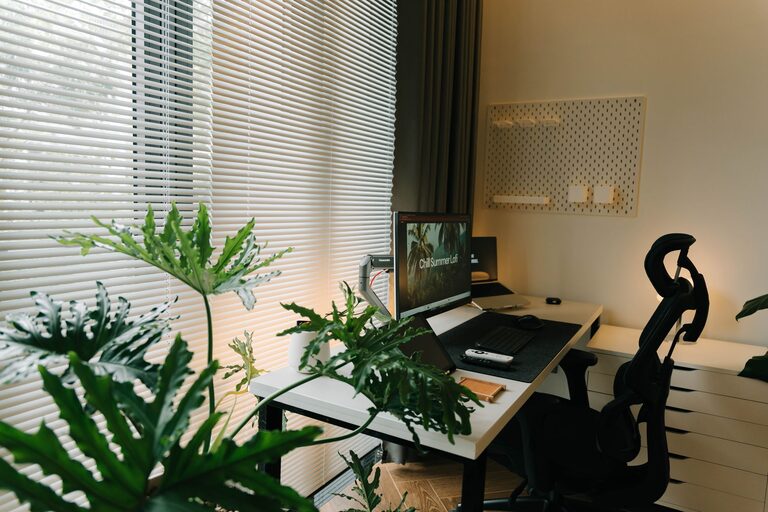
Creating a productive home office environment is essential for anyone working remotely or running a business from home. A well-designed workspace can improve focus, reduce distractions, and make your workday more enjoyable. Whether you have a dedicated room or a small corner in your living space, there are many ways to optimize your home office.
In this post, we’ll explore tips and strategies to help you set up an effective workspace that fosters productivity and well-being.
1. Choose the Right Location
Selecting the best spot for your home office is the first step.
– Natural Light: Try to position your desk near a window. Natural light can boost your mood and energy levels.
– Quiet Space: Find a quiet area away from household noise and foot traffic.
– Good Ventilation: Ensure the space is well-ventilated to keep you alert and comfortable.
– Separate from Living Areas: If possible, pick a separate room or corner that you can associate purely with work.
2. Invest in Ergonomic Furniture
Comfort matters when you spend hours working at a desk.
– Ergonomic Chair: Choose a chair that supports your back and encourages good posture.
– Adjustable Desk: Consider a desk with adjustable height, allowing for sitting or standing.
– Monitor Setup: Position your computer monitor at eye level to reduce neck strain.
– Footrest and Keyboard Placement: Use accessories that keep your wrists and feet comfortable.
3. Minimize Distractions
Keeping distractions at bay is crucial for maintaining focus.
– Declutter: Keep your desk clean and free from unnecessary items.
– Use Noise-Canceling Headphones: If outside noise is a problem, these can help.
– Set Boundaries: Communicate your work hours to family or roommates to minimize interruptions.
– Turn Off Notifications: Limit digital distractions by silencing non-work-related alerts during focus time.
4. Optimize Lighting
Good lighting reduces eye strain and helps concentration.
– Layered Lighting: Combine natural light with overhead and task lighting.
– Desk Lamp: Use an adjustable desk lamp with soft, warm light for focused tasks.
– Avoid Glare: Position your screen and lights to avoid reflections and glare on your monitor.
5. Organize Your Workspace
An organized office saves time and keeps your mind clear.
– Storage Solutions: Use shelves, drawers, or baskets to store supplies.
– Desk Organizers: Utilize trays or organizers for pens, papers, and tools.
– Cable Management: Keep cords neat and out of the way with clips or sleeves.
– Daily Tidying: Spend a few minutes at the end of each day to tidy your workspace.
6. Personalize Your Space
Making the area inviting can increase motivation.
– Use Plants: Adding greenery improves air quality and adds a touch of nature.
– Inspirational Items: Display photos, art, or quotes that inspire you.
– Comfort Items: Include a cozy throw blanket or cushions to make the space welcoming.
7. Establish a Routine
A consistent routine helps your brain switch into work mode.
– Set Working Hours: Define clear start and end times for your workday.
– Take Breaks: Schedule regular breaks to stretch and rest your eyes.
– Create Rituals: Develop pre-work routines, such as making coffee or reviewing a to-do list.
8. Leverage Technology
Use digital tools to support your productivity.
– Task Management Apps: Keep track of projects and deadlines.
– Focus Tools: Consider using apps that block distracting websites.
– Video Calls: Ensure your setup is ready for virtual meetings with good lighting and sound.
9. Keep Air Quality in Mind
A fresh environment promotes alertness.
– Ventilate Often: Open windows when possible.
– Use Air Purifiers: Consider devices that remove dust and allergens.
– Avoid Overheating: Maintain a comfortable temperature.
Conclusion
Creating a productive home office environment involves thoughtful planning and ongoing adjustments. From choosing the right location to personalizing your space, every detail can contribute to better focus and a more enjoyable workday. With these tips, you’re well on your way to setting up an inspiring workspace that supports your professional goals and well-being.
Remember, productivity is not just about working harder—it’s about working smarter in a space that works for you.