 11
11Creating a productive home office space is essential for anyone working remotely or managing tasks from home. A well-designed workspace can increase focus, reduce distractions, and make your workday more enjoyable and efficient. Whether you have a dedicated room or a small corner, these tips will guide you in setting up a functional and inspiring home office.
Finding the ideal spot for your home office is the first step. Consider these factors:
– Quiet Area: Look for a part of your home with minimal noise and foot traffic.
– Natural Light: Place your desk near a window to take advantage of daylight, which can boost mood and energy.
– Space Needs: Ensure the area is large enough to accommodate your desk, chair, and work essentials without feeling cramped.
– Privacy: If you share your home with others, pick a place where you can concentrate without frequent interruptions.
Comfort matters when you spend hours working. Choose ergonomic furniture to maintain good posture and prevent strain.
– Chair: Select an adjustable chair with good lumbar support.
– Desk: Use a desk at the right height to keep your arms and wrists in a comfortable position.
– Monitor Stand: Raise your monitor so the top of the screen is at eye level to avoid neck pain.
– Keyboard and Mouse: Opt for ergonomic devices designed to reduce repetitive strain.
Clutter can reduce productivity. Keeping your office organized promotes a clear mind.
– Declutter: Remove unnecessary items from your desk.
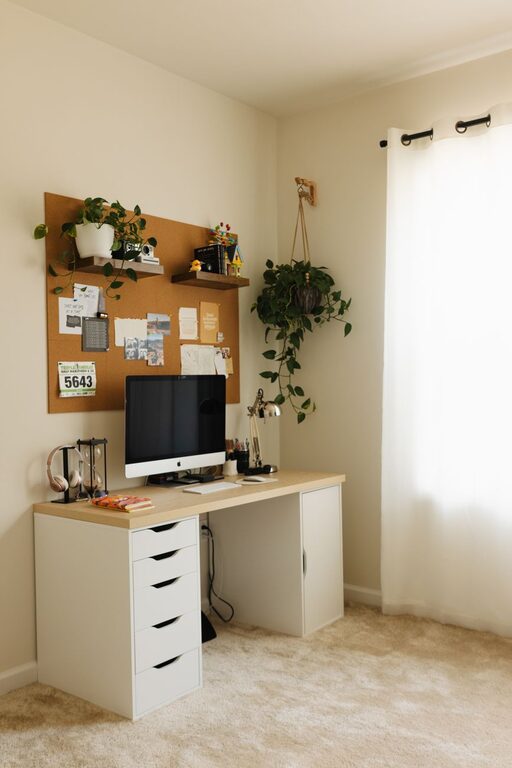
– Storage Solutions: Use shelves, drawers, or filing cabinets to store supplies and documents.
– Cable Management: Keep cords tidy with clips or organizers to prevent tangling.
– Daily Cleanup: Spend a few minutes at the end of each day tidying your space.
Good lighting reduces eye strain and increases alertness.
– Use Natural Light: Position your desk to get natural daylight but avoid glare on your screen.
– Task Lighting: Add a desk lamp with adjustable brightness for focused tasks.
– Balanced Lighting: Combine overhead lights with lamps to reduce harsh shadows.
Adding personal touches can make your workspace more inviting and motivate you to work.
– Decor: Include artwork, plants, or photos that inspire you.
– Colors: Choose calming or energizing colors depending on your preference.
– Comfort Items: Keep a cozy blanket, cushion, or footrest for comfort.
Reliable technology is key to staying productive.
– High-Speed Internet: Ensure your connection is fast and stable.
– Backup Power: Use a surge protector or UPS to protect your equipment.
– Headphones: Noise-cancelling headphones can help block distractions.
– Multiple Screens: Consider using two monitors to increase efficiency.
Working from home requires clear boundaries between work and personal life.
– Work Hours: Set consistent start and end times for your workday.
– Separate Space: Use your home office only for work to help mentally separate tasks.
– Communicate: Inform household members about your work schedule and when not to disturb.
Regular breaks refresh your mind and body.
– Scheduled Breaks: Follow the Pomodoro technique or take short breaks every hour.
– Stretching: Do simple stretches or stand while working occasionally.
– Walks: Step outside for fresh air to clear your mind.
Avoid interruptions by having your necessary tools close at hand.
– Essential Stationery: Keep pens, notebooks, and other supplies within reach.
– Refreshments: Have water or healthy snacks nearby to stay hydrated and energized.
– Tech Accessories: Store chargers, USB drives, and adapters in a dedicated spot.
Your needs might change over time. Periodically assess your home office setup.
– Comfort Check: Adjust furniture or lighting as needed.
– Update Equipment: Upgrade technology or tools to enhance efficiency.
– Reorganize: Tackle accumulated clutter to maintain a clean space.
—
By following these tips, you can create a home office space that is comfortable, organized, and geared toward productivity. Remember that a great workspace supports your work habits and well-being, helping you make the most of your time at home.